Recently, first-year students of the Department of Multimedia Communication at Van Hien University participated in a hands-on field trip to a professional film studio as part of the course titled Multimedia Communication Industry Experience.
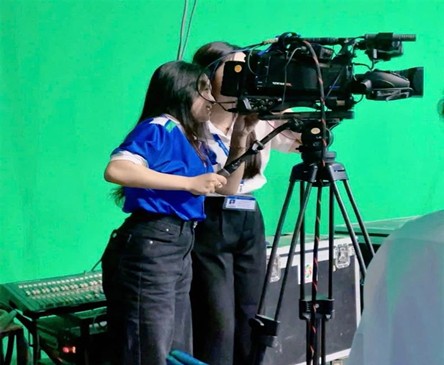
Figure 1: First-Year Multimedia Communication Students Practicing Camera Operation in a Green-Screen Studio (Students engage in hands-on training with professional broadcast cameras in a green-screen studio as part of the Industry Experience course)
This experiential learning activity was designed to help students gain an early, realistic understanding of their chosen discipline and the professional environment they may later enter. During the visit, students were introduced to the development of the media and communication industry in Vietnam, current television production models, as well as the core competencies and professional qualities necessary for employment in this field.
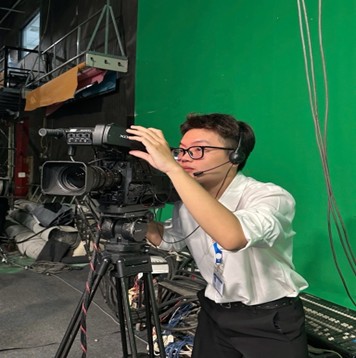
Figure 2: Hands-On Experience with Broadcast Camera Equipment in a Professional Film Studio (Freshman students operate broadcast-grade cameras to familiarize themselves with studio-based television production workflows)
Experienced television directors guided students through the production process, sharing practical insights into career paths, recruitment expectations, and the differences between television and film directing. An interactive Q&A session enabled students to connect directly with industry professionals and address common concerns about job opportunities and career growth in multimedia communication.
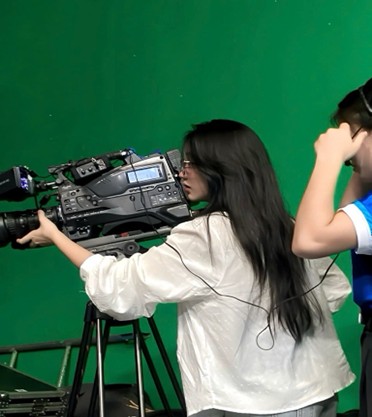
Figure 3: Exploring Technical Production Roles During Studio-Based Learning Activities (Students participate in behind-the-scenes technical tasks, including camera positioning and framing, to understand key production roles in multimedia communication)
A highlight of the trip was the opportunity for students to explore professional studio equipment and participate in a simulated talk show production. By rotating roles such as director, camerawork operator, MC, and guest speaker, students experienced not only the technical aspects of production but also the real-time pressure and teamwork required in professional media settings.
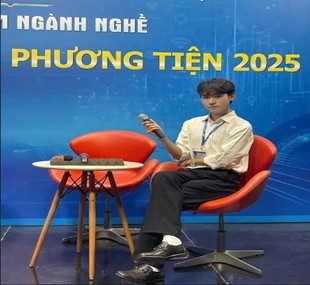
Figure 4: Simulated Talk Show Practice in a Professional Studio Environment
(Students take on different roles such as host, guest, and production crew to experience the dynamics and pressure of real-world media production)
This activity provided students with valuable practical exposure, helping them connect theoretical learning with real-world applications. More importantly, it fostered enthusiasm, motivation, and creative inspiration among first-year students, laying a strong foundation for their academic journey in Multimedia Communication.
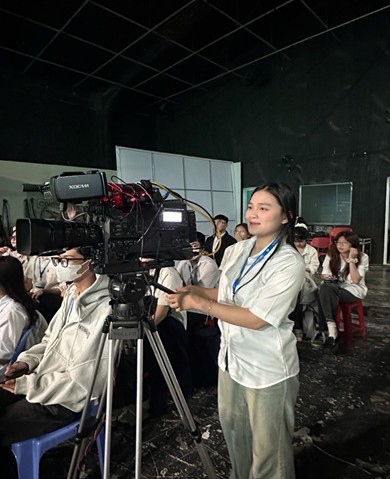
Figure 5: Applying Theoretical Knowledge to Practice Through Live Filming Activities
(Through live filming exercises, students integrate theoretical concepts with practical skills in an authentic media production setting)
Through field trips to a professional film studio and industry-oriented learning experiences like this, the Faculty of Social Sciences and Humanities continues to affirm its commitment to practice-based education, industry linkage, and student-centered learning, equipping students with the skills and mindset needed to thrive in the dynamic world of multimedia communication.
Writtent by: VanLTK & TienTX2
References
Kolb, D. A. (2015). Experiential learning: Experience as the source of learning and development (2nd ed.). Pearson Education.
Mayer, R. E. (2020). Multimedia learning (3rd ed.). Cambridge University Press.
UNESCO. (2021). Reimagining our futures together: A new social contract for education. UNESCO Publishing.
Note: All photographs were taken during the Industry Experience course of the Multimedia Communication program, Faculty of Social Sciences and Humanities.