In early December 2025, the Department of Literature under the Faculty of Social Sciences and Humanities organized a vocational field trip for first-year students of the Vietnamese Studies major (academic year 2025–2026) in Sa Dec, Dong Thap Province. Participants included Dr. Pham Kim Ngan (lecturer), Dr. Le Duong Khac Minh (lecturer and Academic Advisor), and 98 freshmen.
This year, the Department of Literature at Van Hien University took the initiative to take students on a long-distance trip to provide practical and rewarding experiences tailored to the Vietnamese Studies major. Students gained exposure to various fields relevant to their curriculum. Specifically, the group visited the Sa Dec Bonsai Museum, the largest and most unique private bonsai museum located in the heart of Sa Dec Flower Village. Founded by artisan Nguyen Phuoc Loc, a leading expert in Vietnam’s ornamental plant community, the museum houses over 1,000 artistic bonsai works (with some records citing over 4,000 items including other ancient ornamental trees). This multi-million dollar collection features several national record-holders, most notably the oldest pair of ornamental tamarind trees in Vietnam, aged approximately 160 years.
Visiting the Sa Dec Bonsai Museum was more than just a sightseeing tour; it was an opportunity for students to learn about techniques and artistic philosophy, such as the art of bending and pruning trees into various styles: thác đổ (cascade), trực quân tử (upright), and bay (semi-cascade). They also gained biological knowledge and understood the process of transforming a raw stump into a high-value work of art. The visit fostered aesthetic thinking and deep life philosophies, including patience, stillness, the harmony between humans and nature, and the concept of asymmetry and minimalism (Wabi-sabi). Furthermore, students participated in hands-on activities, practicing basic tree care under the guidance of experts.
The next stop was Kien An Cung (commonly known as Ong Quach Pagoda), a famous ancient temple located in the center of Sa Dec City. Recognized as a National Historical-Cultural Relic in 1990, it is a quintessential cultural landmark of the Chinese community. Built between 1924 and 1927 by Chinese immigrants from Fujian province, its official name is Kien An Cung, but locals call it Ong Quach Pagoda because its primary deity is Guangze Zunwang (popularly known as Ong Quach), a god believed to save people from misery.
Through exploring Kien An Cung, students not only engaged in spiritual worship but also learned valuable lessons in culture, art, and history. They observed the sophistication of plastic arts (architecture and sculpture), seeing how ancient people integrated historical stories (such as Romance of the Three Kingdoms) into vivid reliefs and horizontal lacquered boards. The technique of using ceramic shards to form dragons and phoenixes on the roof tiles served as a lesson in patience and folk aesthetics. Students also studied the "Noi Cong Ngoai Quoc" (Inner Work, Outer Country) architectural layout and the use of "Thien Tinh" (skylights) for natural lighting and ventilation. Kien An Cung stands as a testament to the solidarity of the Fujian-speaking Chinese community in Vietnam, who contributed labor and funds to build a "common house" to preserve their identity. The architectural style reflects a blend of Chinese culture and the spiritual life of the Mekong Delta people. The carvings often depict filial piety, loyalty, and righteousness. In particular, the figure of Guangze Zunwang is revered for his filial piety and kindness, reminding future generations of human morality. Preserving a century-old structure intact offers lessons in respecting heritage and maintaining traditional values, showing how the combination of spiritual belief and sustainable tourism keeps an ancient relic "alive" and attractive to international tourists.
The final stop of the journey was the Huynh Thuy Le Ancient House. Located at 255A Nguyen Hue Street, Sa Dec, this architectural marvel is over 130 years old and is famous not only for its artistic beauty but also for a romantic cross-border love story. Built in 1895 by Mr. Huynh Cam Thuan (father of Huynh Thuy Le), the house originally featured traditional Southern Vietnamese architecture. In 1917, it was renovated with French-style brickwork, creating a unique cultural fusion of Vietnamese, Chinese, and French styles. The house gained global fame through the love affair between Huynh Thuy Le and the French writer Marguerite Duras. This romance was later immortalized in her novel L'Amant (The Lover), which won the prestigious Prix Goncourt. In 1992, the film adaptation was released worldwide, making the house a top destination for international tourists. Currently, the Huynh Thuy Le Ancient House is recognized as a National Relic (2009) and serves as a key highlight in Mekong Delta tours.
The Vocational filed trip for the first-year Vietnamese Studies students of Van Hien University was a truly practical and rewarding trip. Through this journey, students developed a deeper love for the country, the people, and the rich culture of Vietnam.
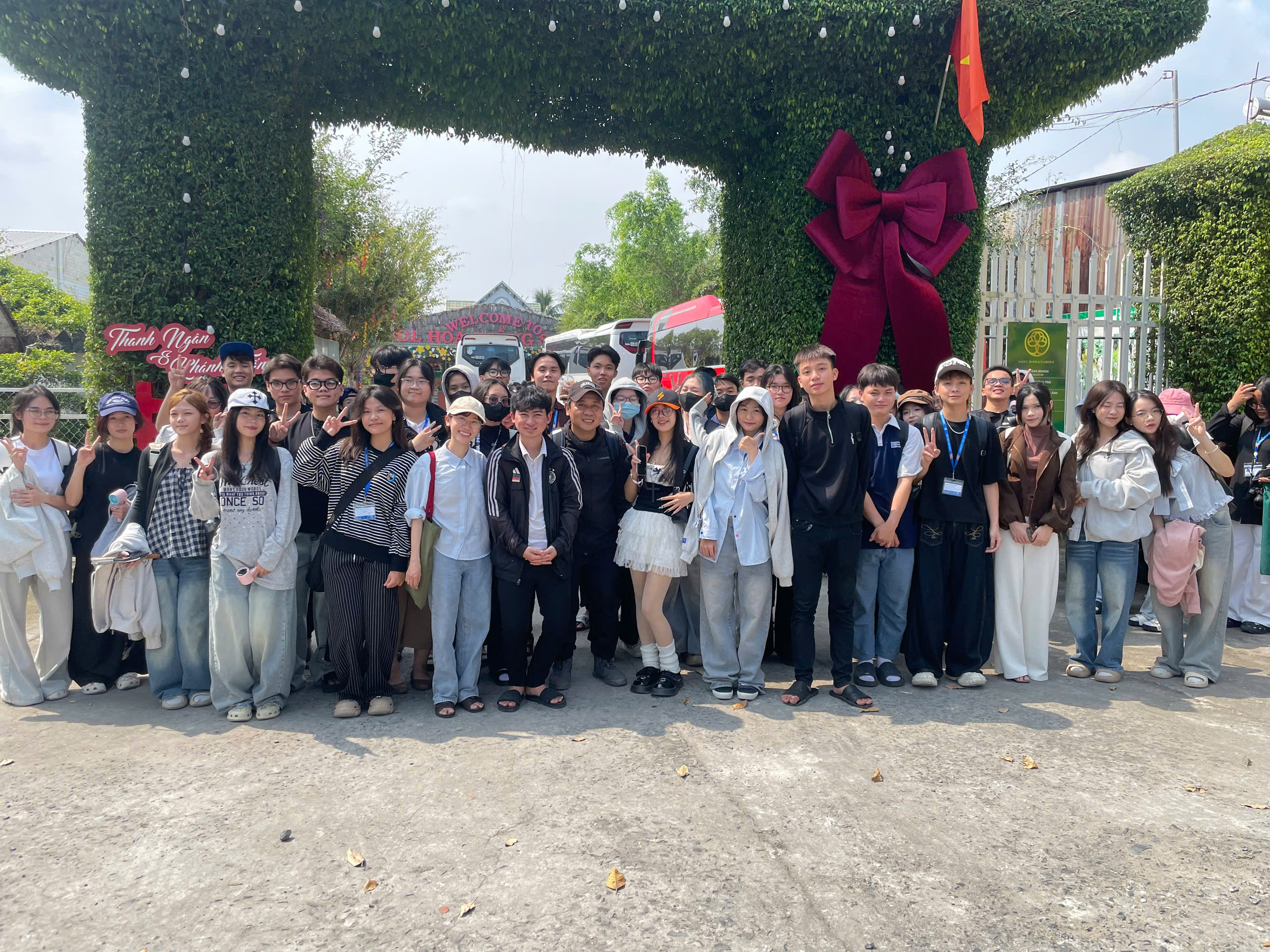
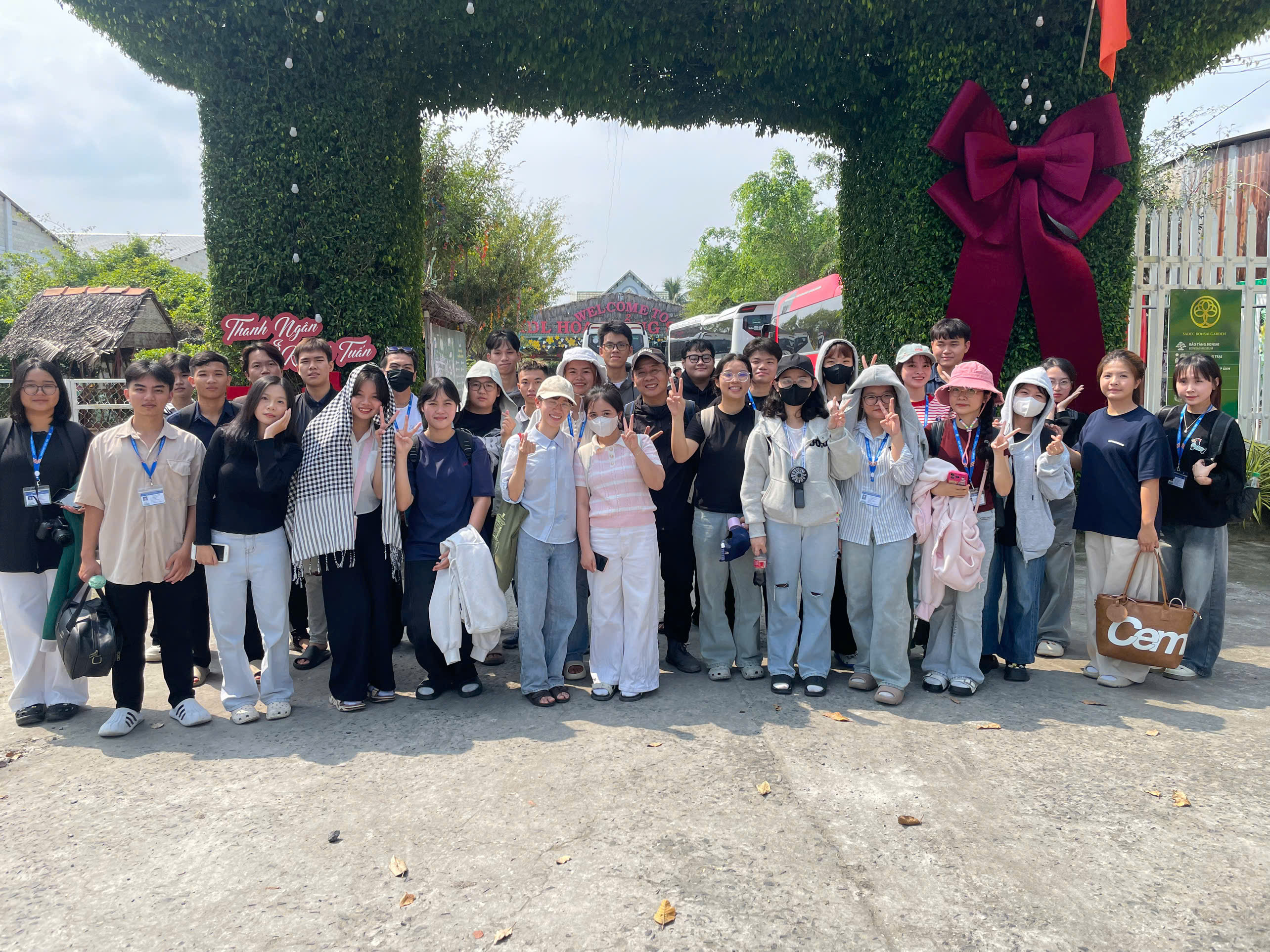
Below are some photos taken from the trip:
Written by MinhLDK